
My Role
As the UX design lead for the project, I worked directly with the product manager and development team at Longos. My primary responsibility was to research, identify, and resolve the issues with the existing catering order process by designing a streamlined in-store digital application.
The Research
To fully understand the ordering process and identify pain points, we interviewed two key groups:
Customers who had used the existing process and encountered issues
Food service departments responsible for fulfilling the orders
Customer Insights:
Customers wanted a simpler, more user-friendly alternative to the paper-based method.
Repeat customers, such as managers ordering for companies, had experienced recurring errors in their orders.
Frequent customers expressed a desire for personalized features, including saved previous orders, preferences, and order suggestions.
Service Department Insights:
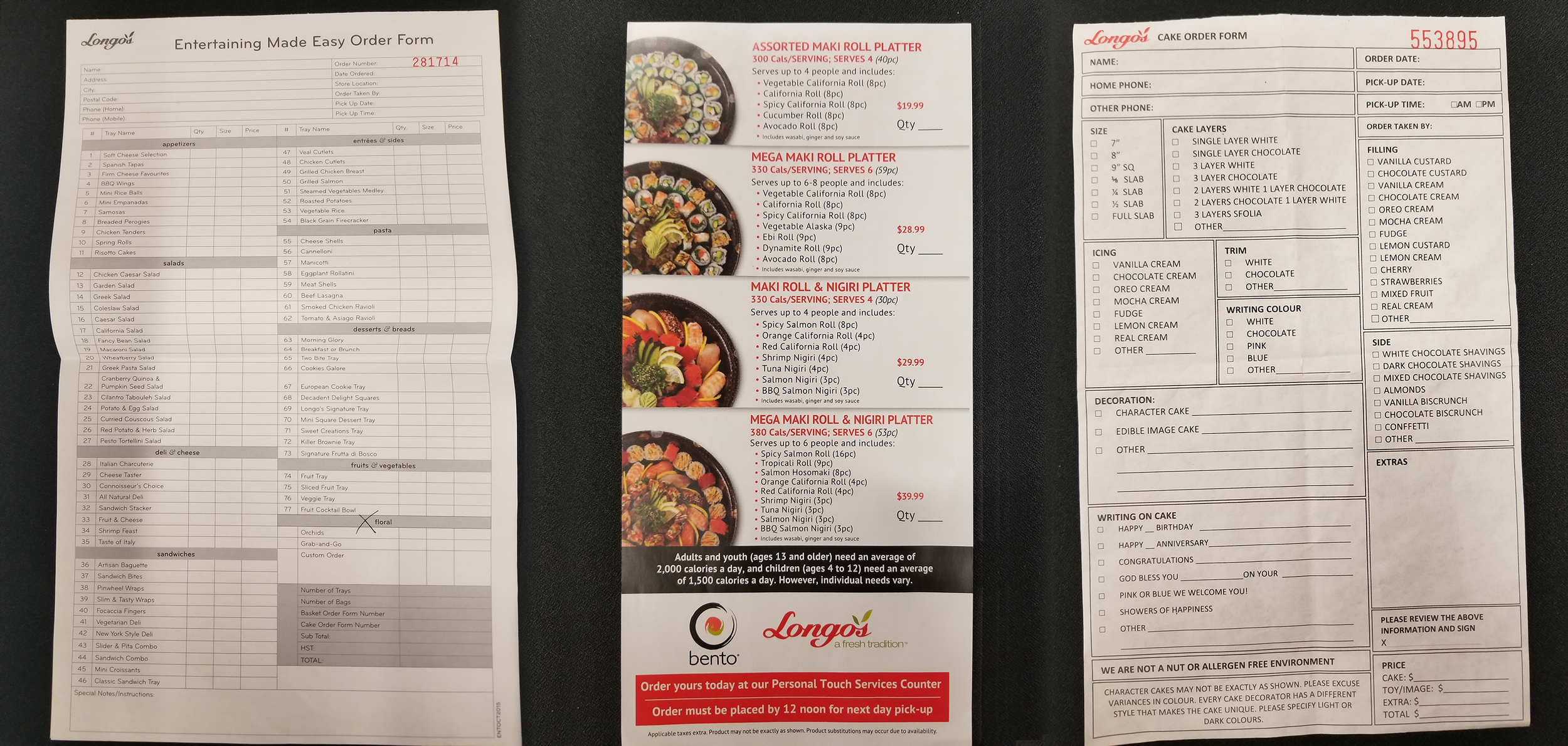
Orders were typically compiled on a single piece of paper, photocopied, and distributed to each department. Fulfillment staff had to manually read through the entire order and identify which items were their responsibility, leading to frequent mistakes and missing items.
During busy periods, there was no efficient way to manage the priority of orders, causing confusion and delays.
The lack of a system to manage delivery times meant customers could request any pickup time, regardless of the number of orders in the queue, further complicating logistics.
The Solution
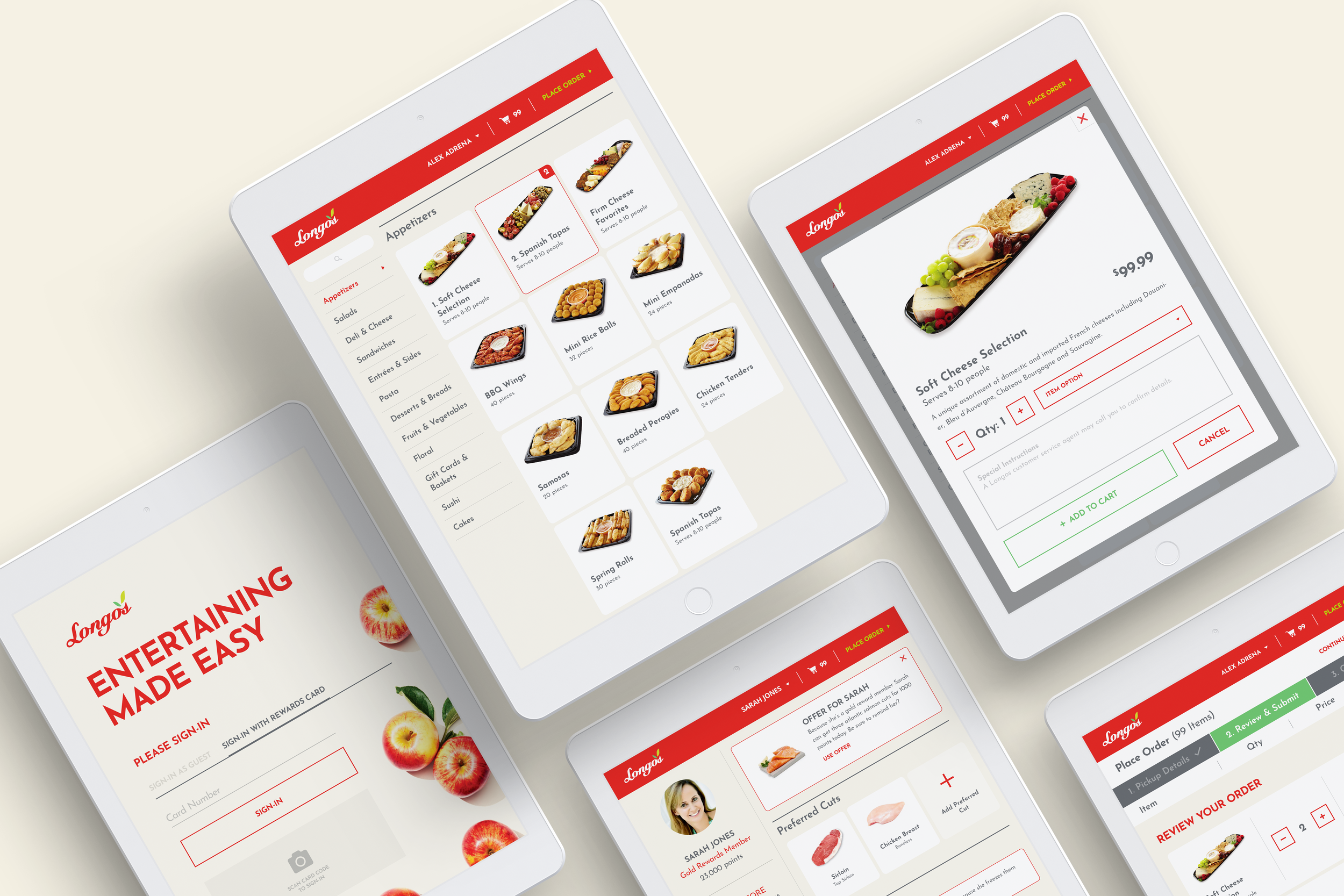
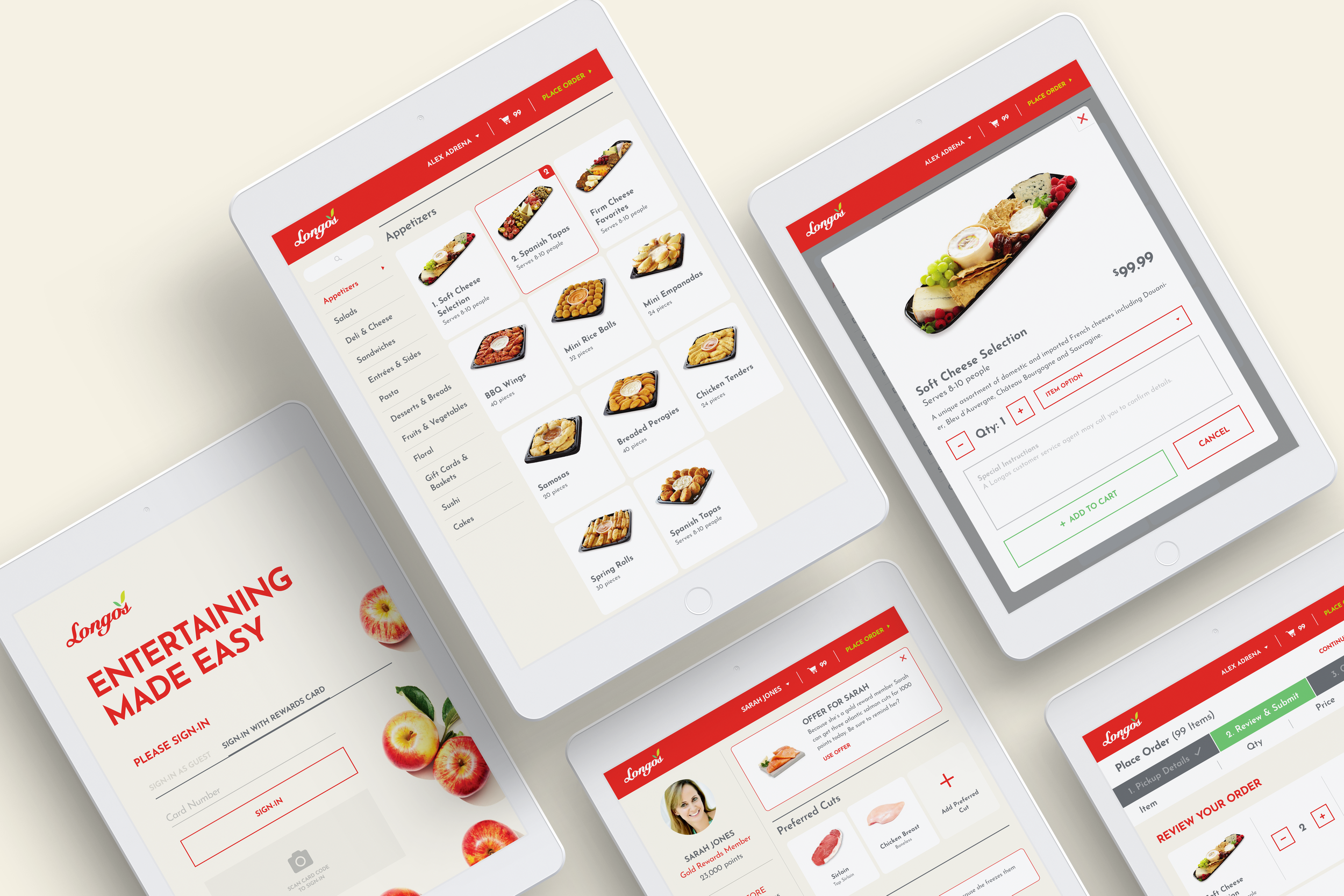
We decided to develop a responsive mobile app to replace the paper-based ordering forms, initially piloted on tablets in-store. The app would eventually evolve into a fully accessible mobile application for customers, allowing them to place catering orders from anywhere. Additionally, each department would be equipped with a tablet running an order queue application, enabling service agents to manage and assign items to staff for fulfillment from incoming orders.
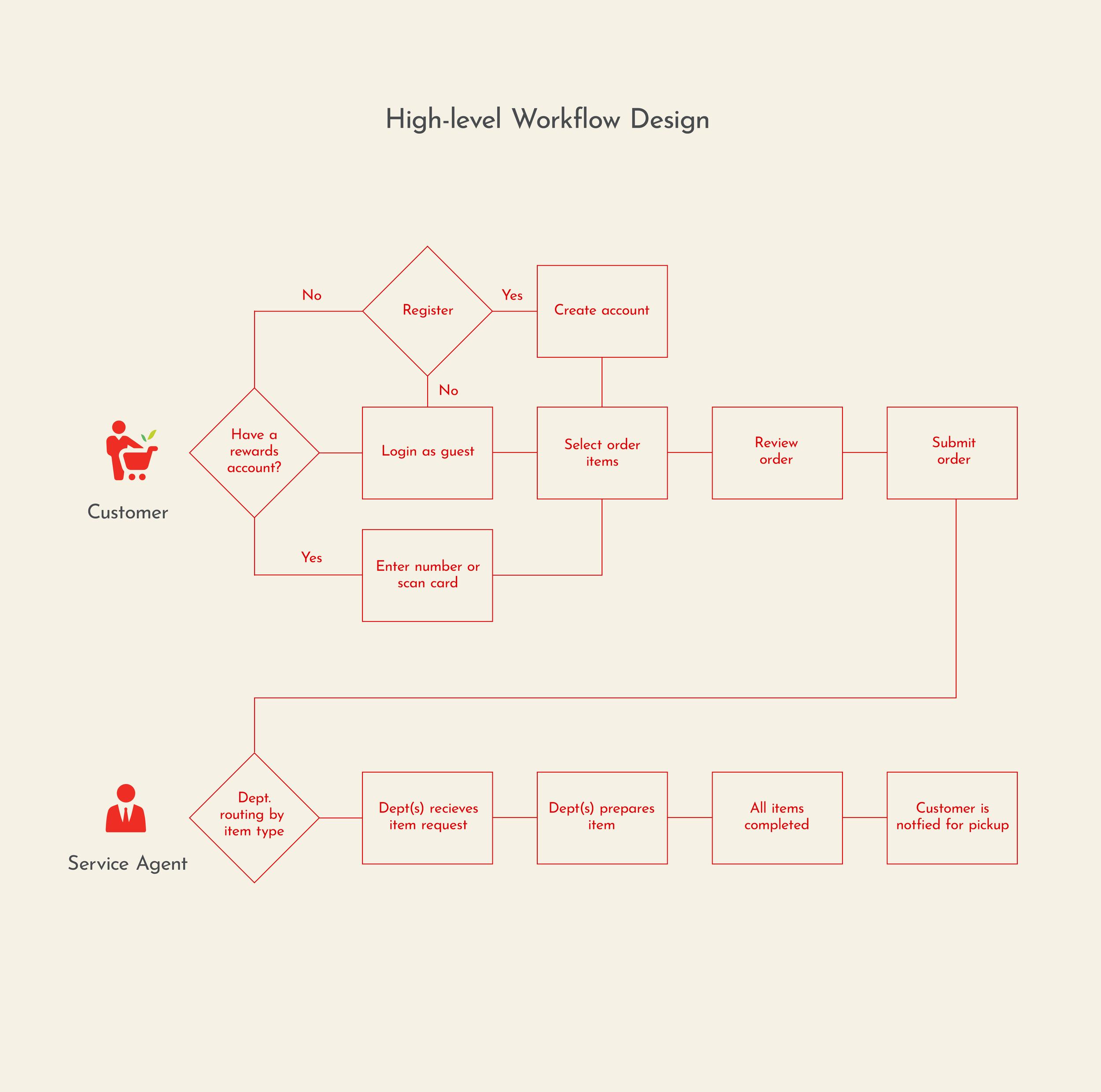
Before designing wireframes, we first created a high-level workflow diagram to map out the new process for both customers and service agents. This allowed us to visualize the entire journey. Each step in the flow was broken down into smaller tasks, forming the user stories for design and development. These flows were then validated with project stakeholders and department leads at Longos to ensure alignment and accuracy.
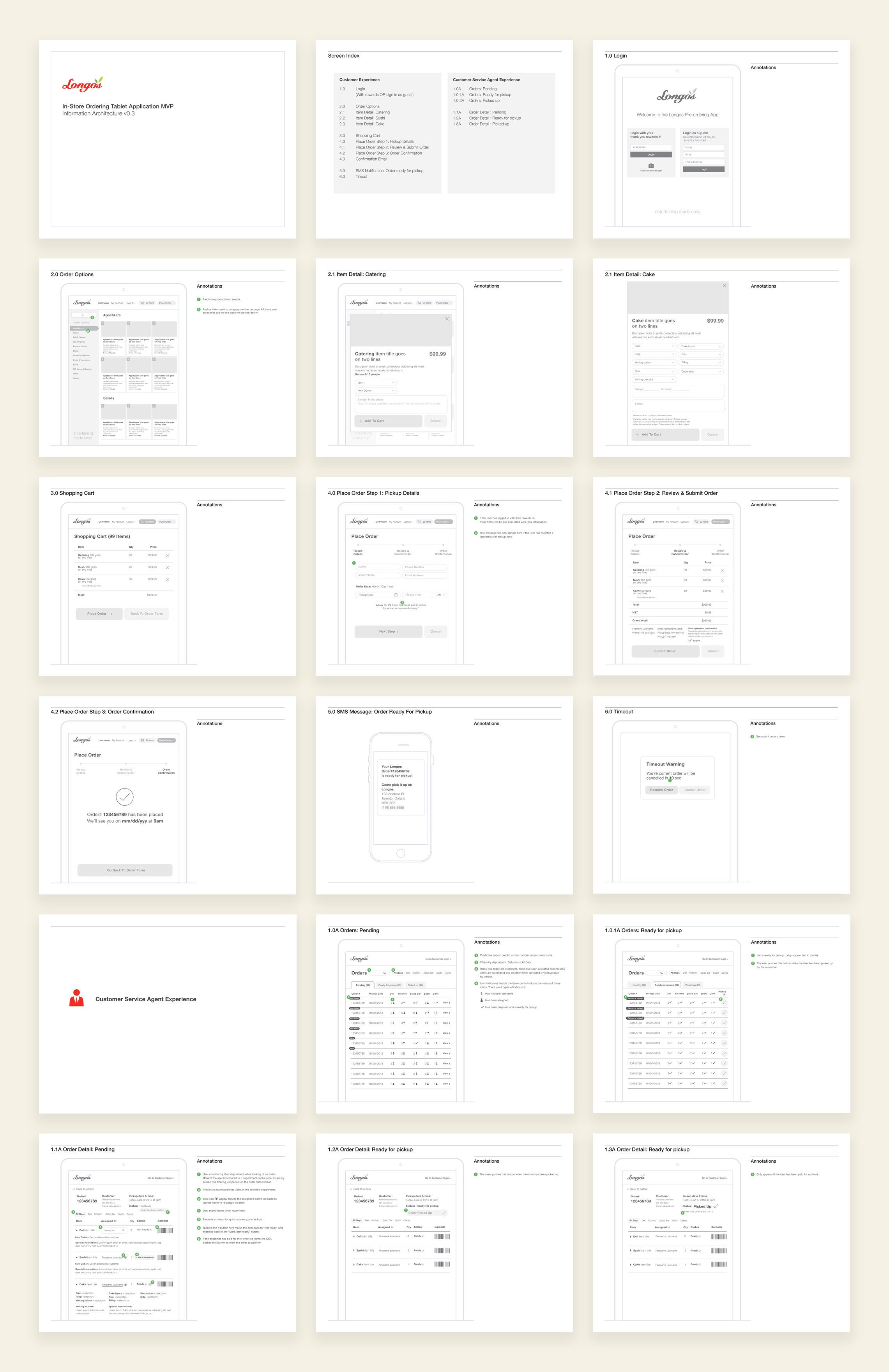
Then lo-fidelity wireframes were designed to focus on user flow and functionality.
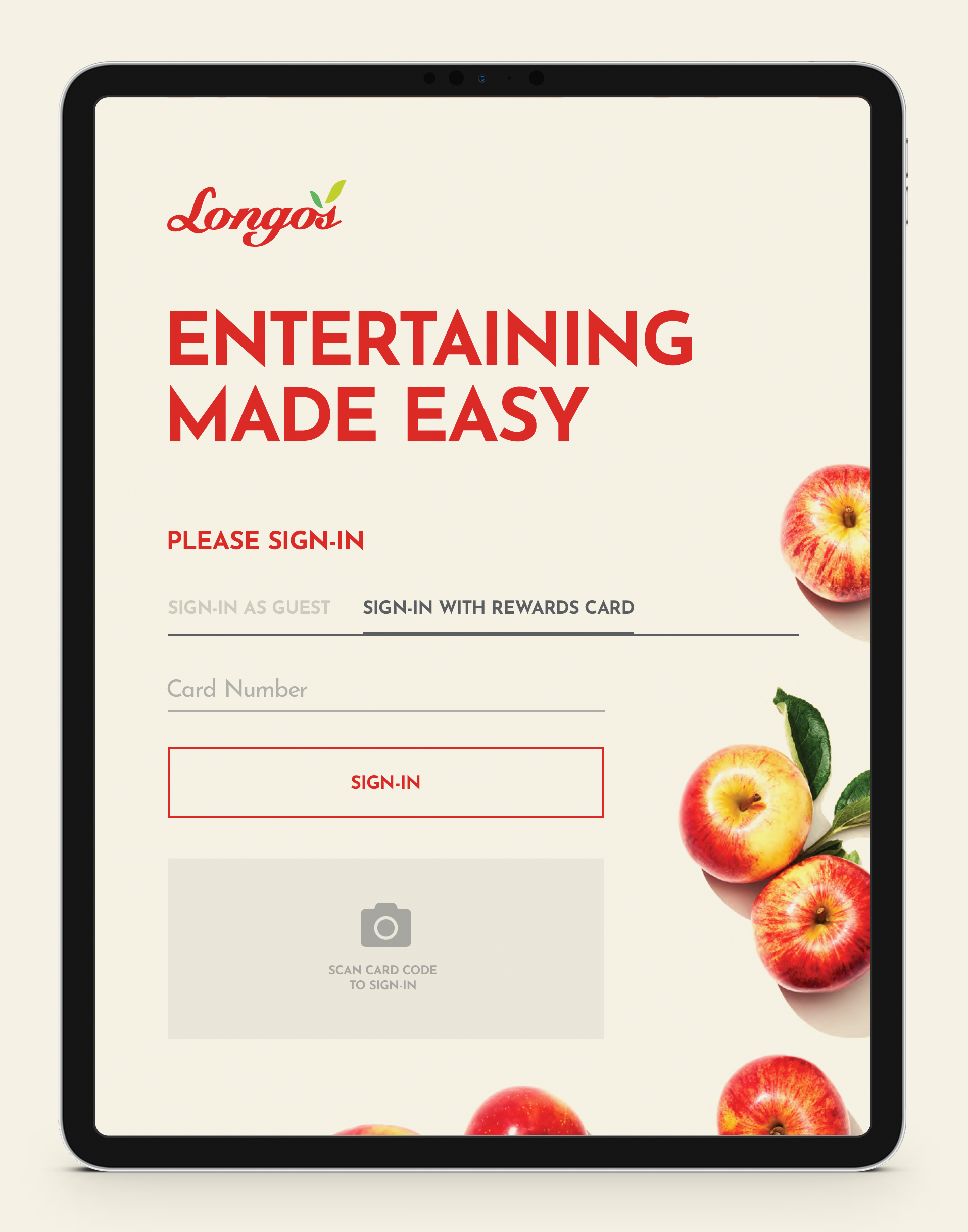
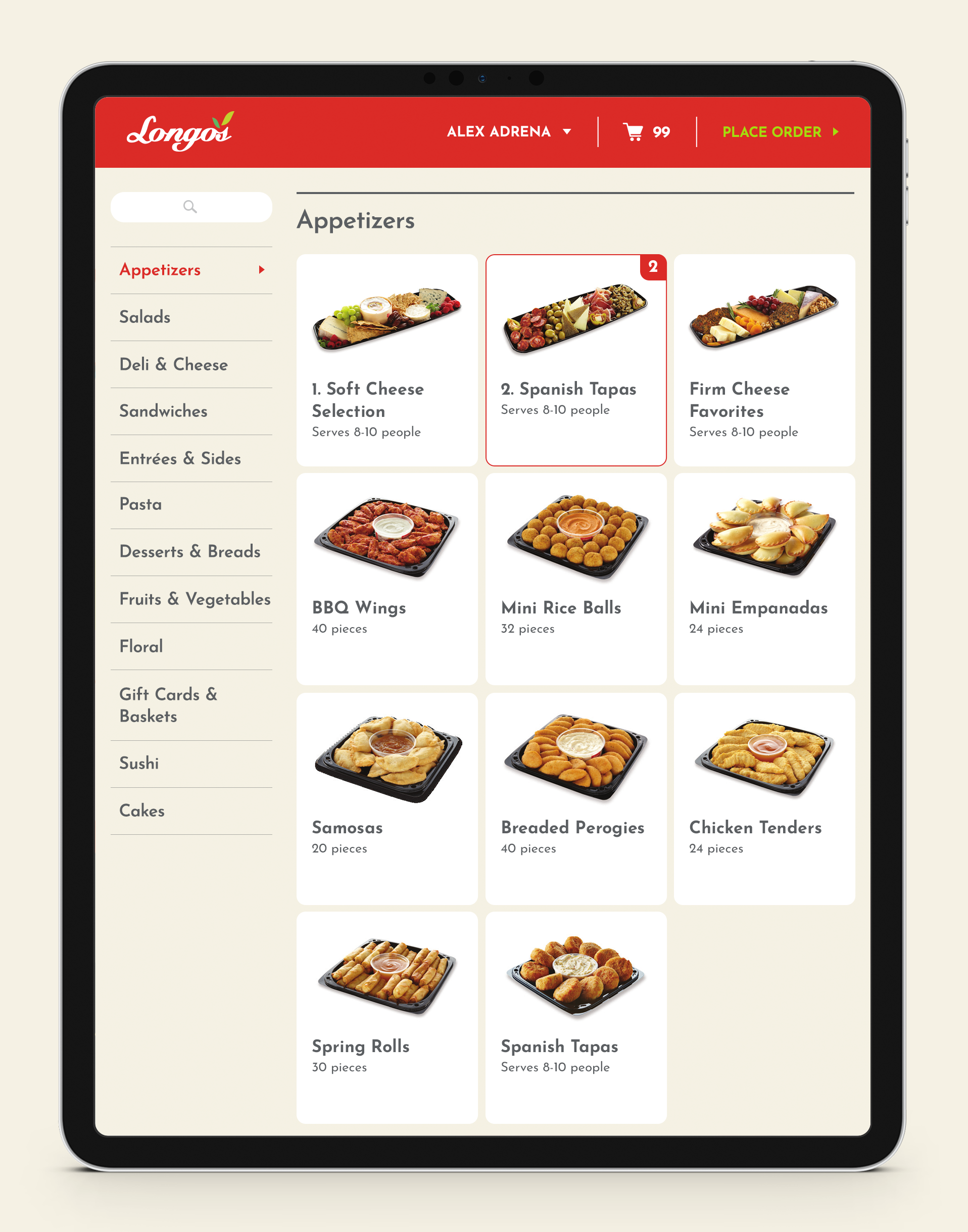
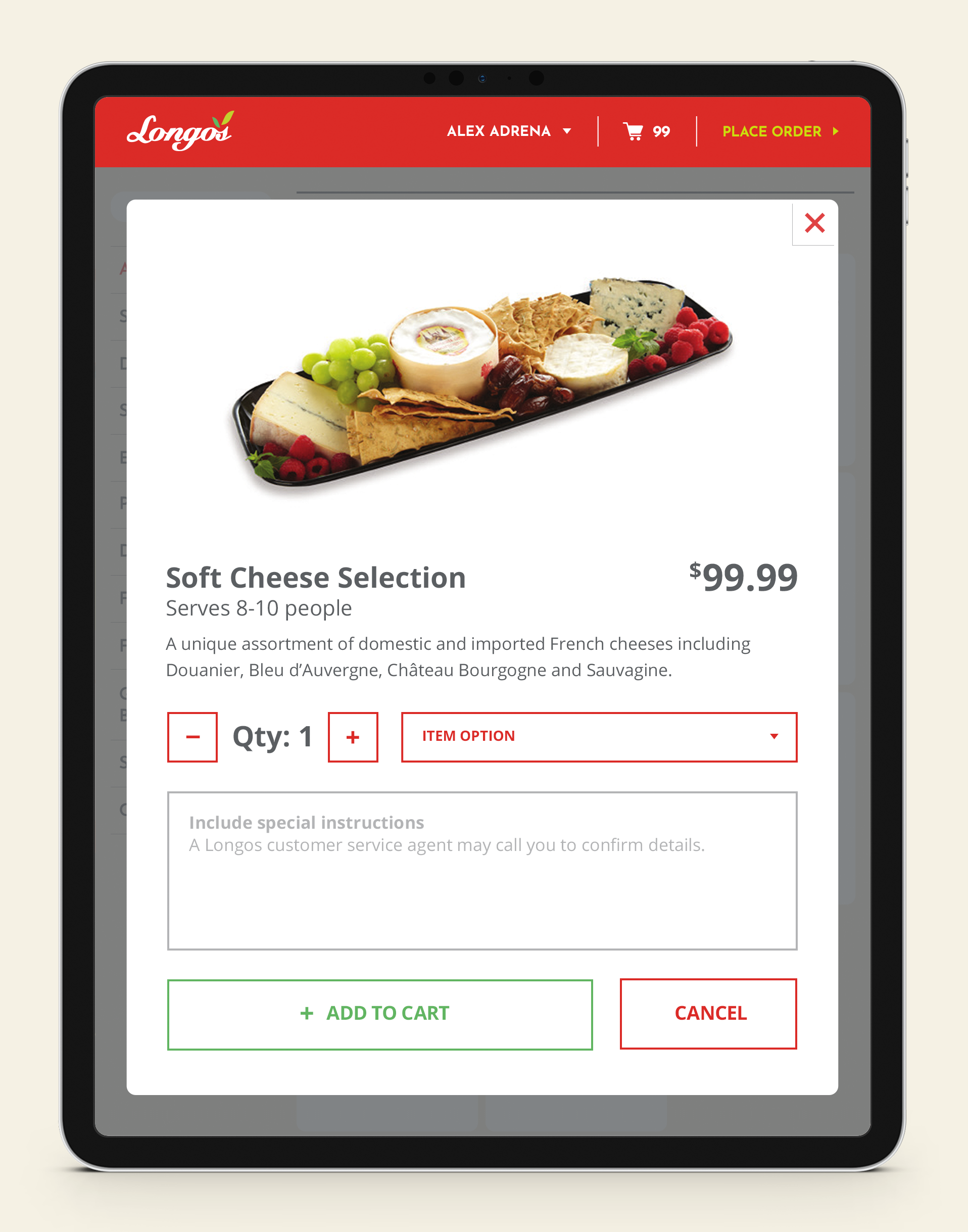
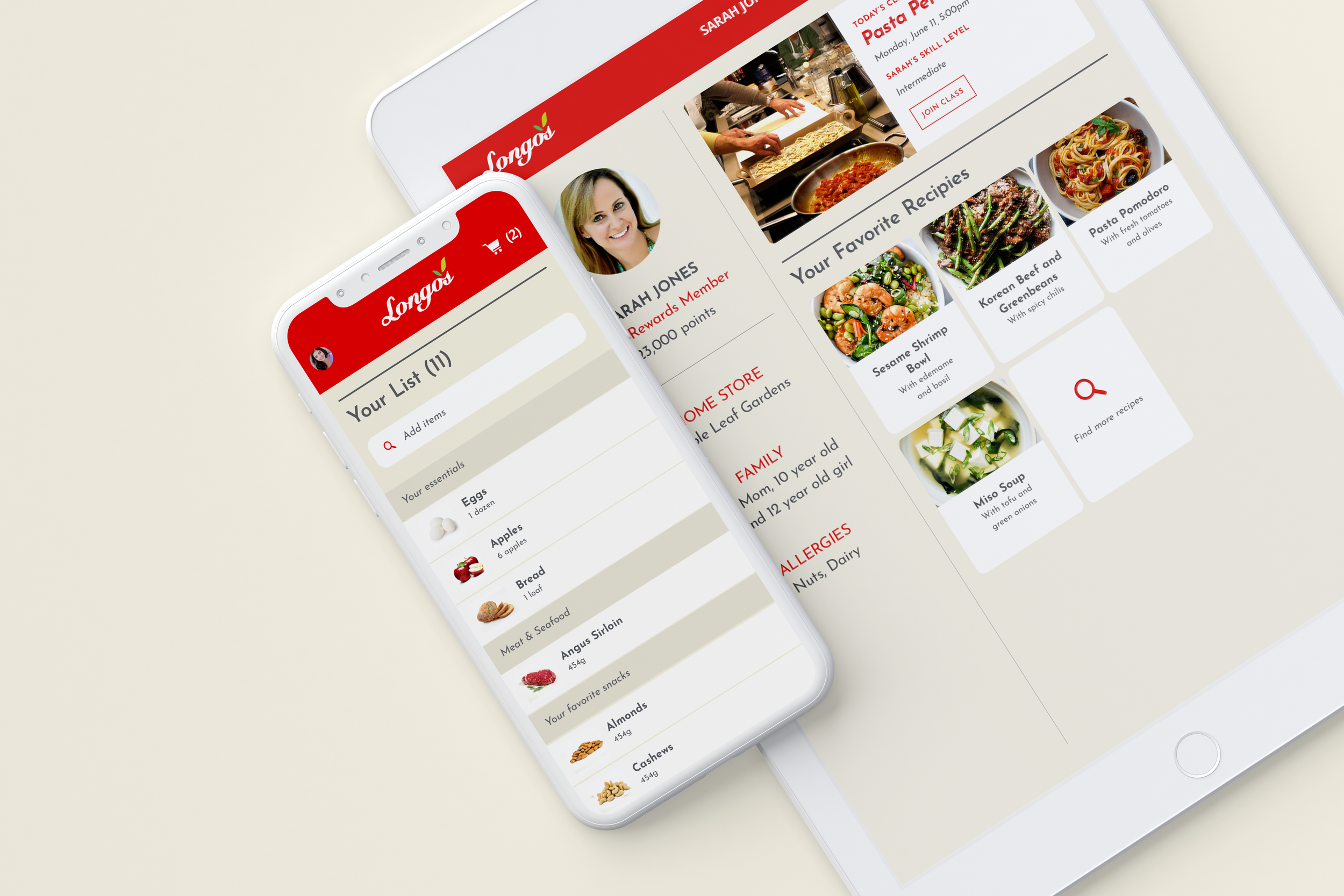
Validated wireframes were developed into high-fidelity mockups, and a UI system was created to visually align with Longo's branding.
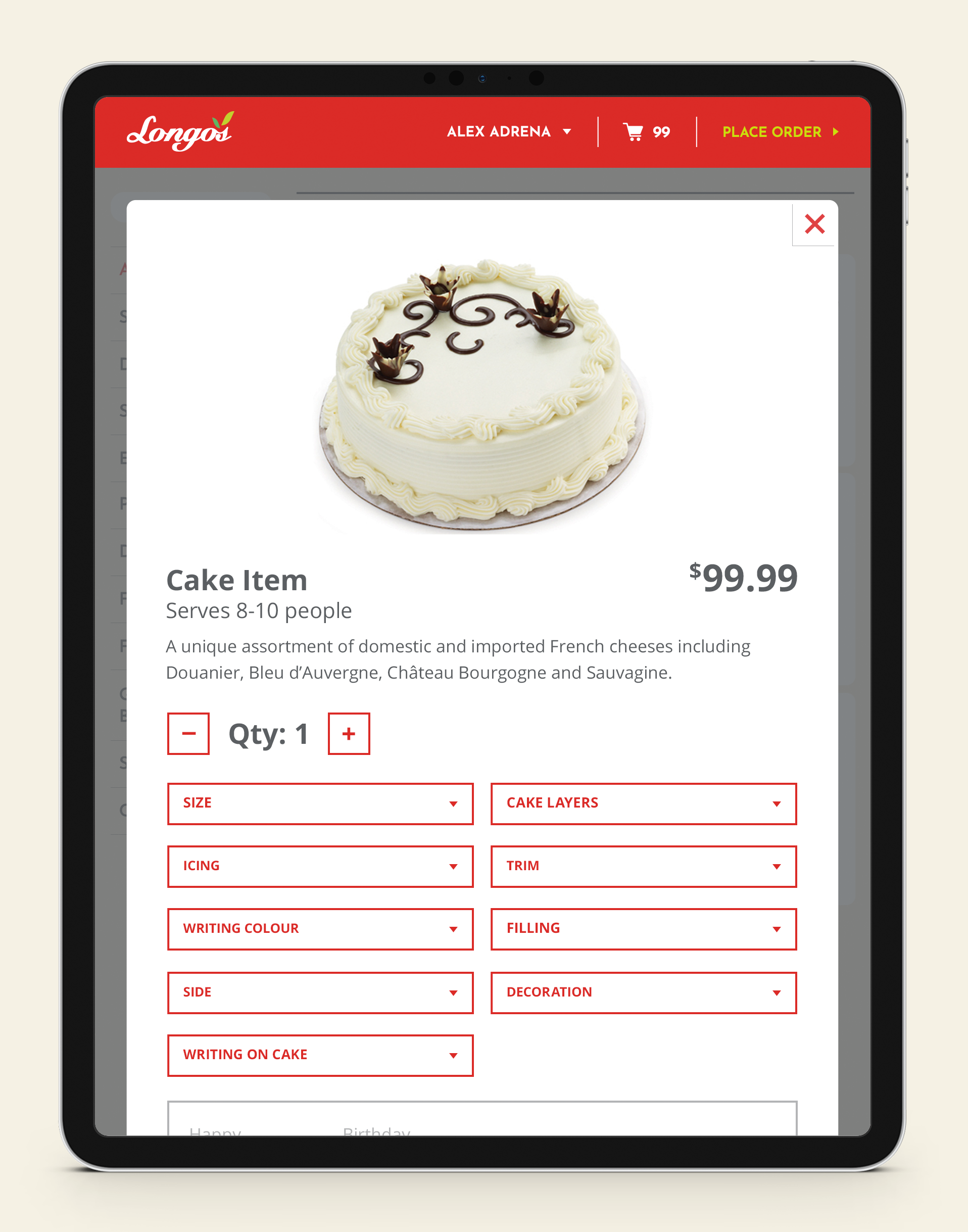
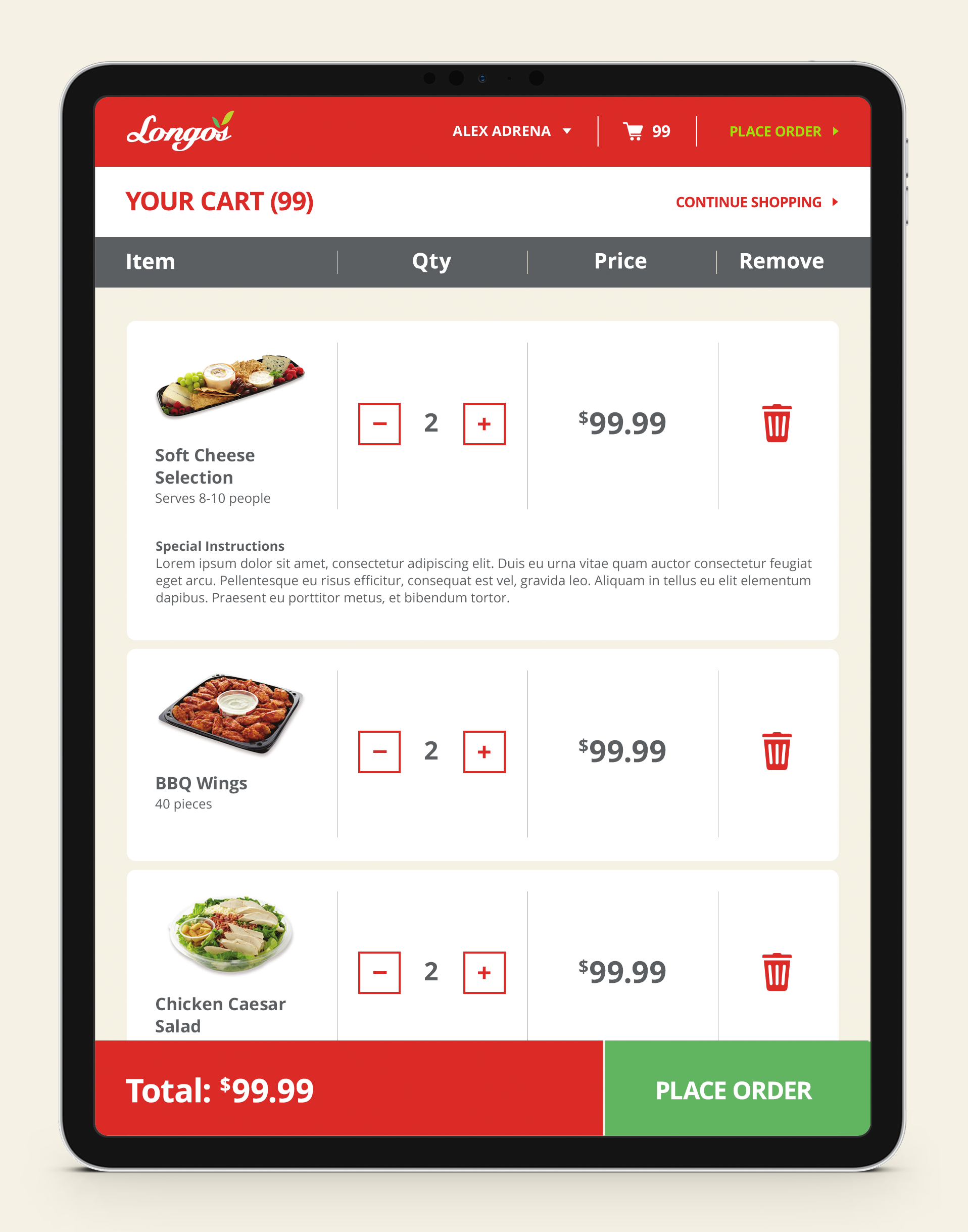
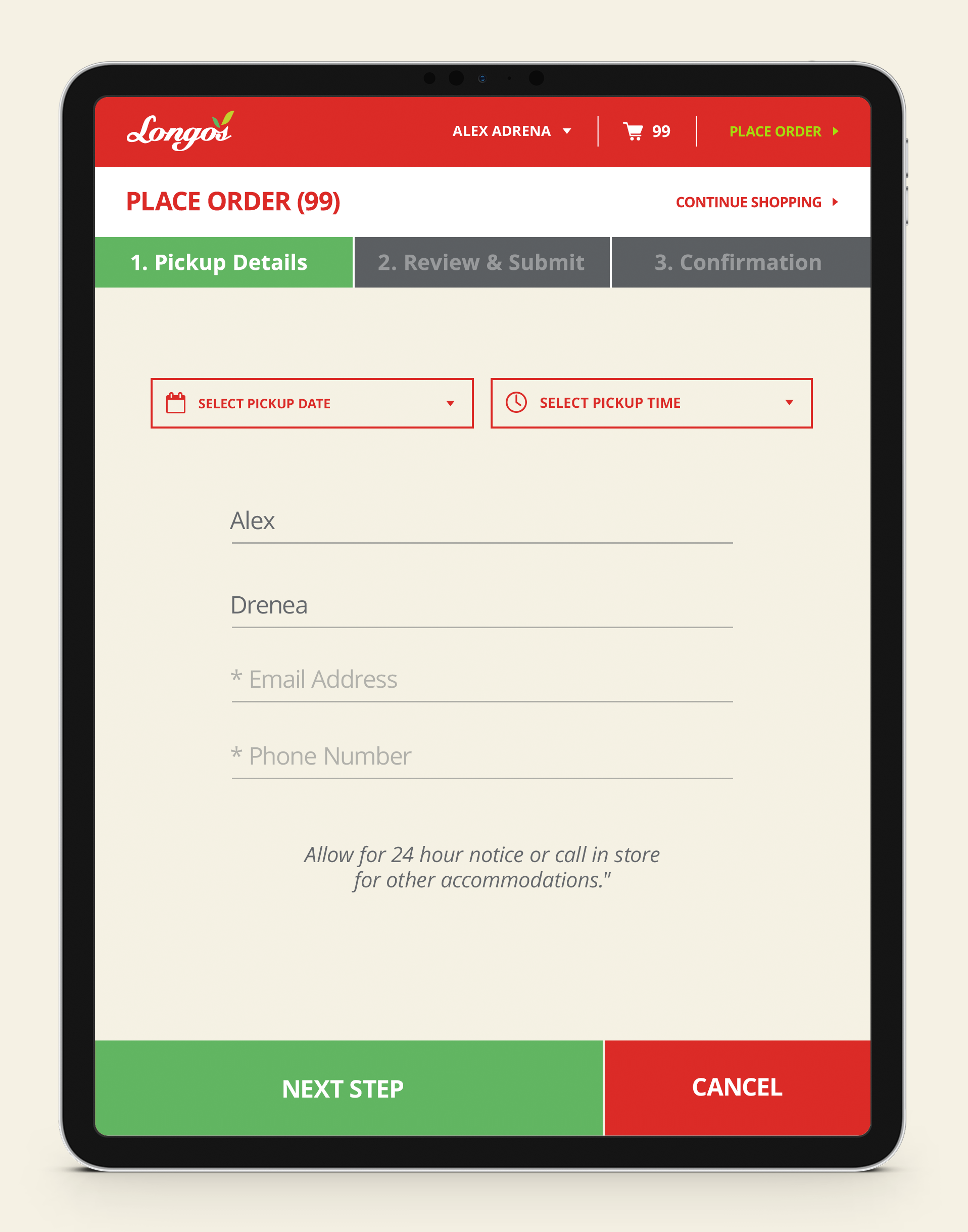
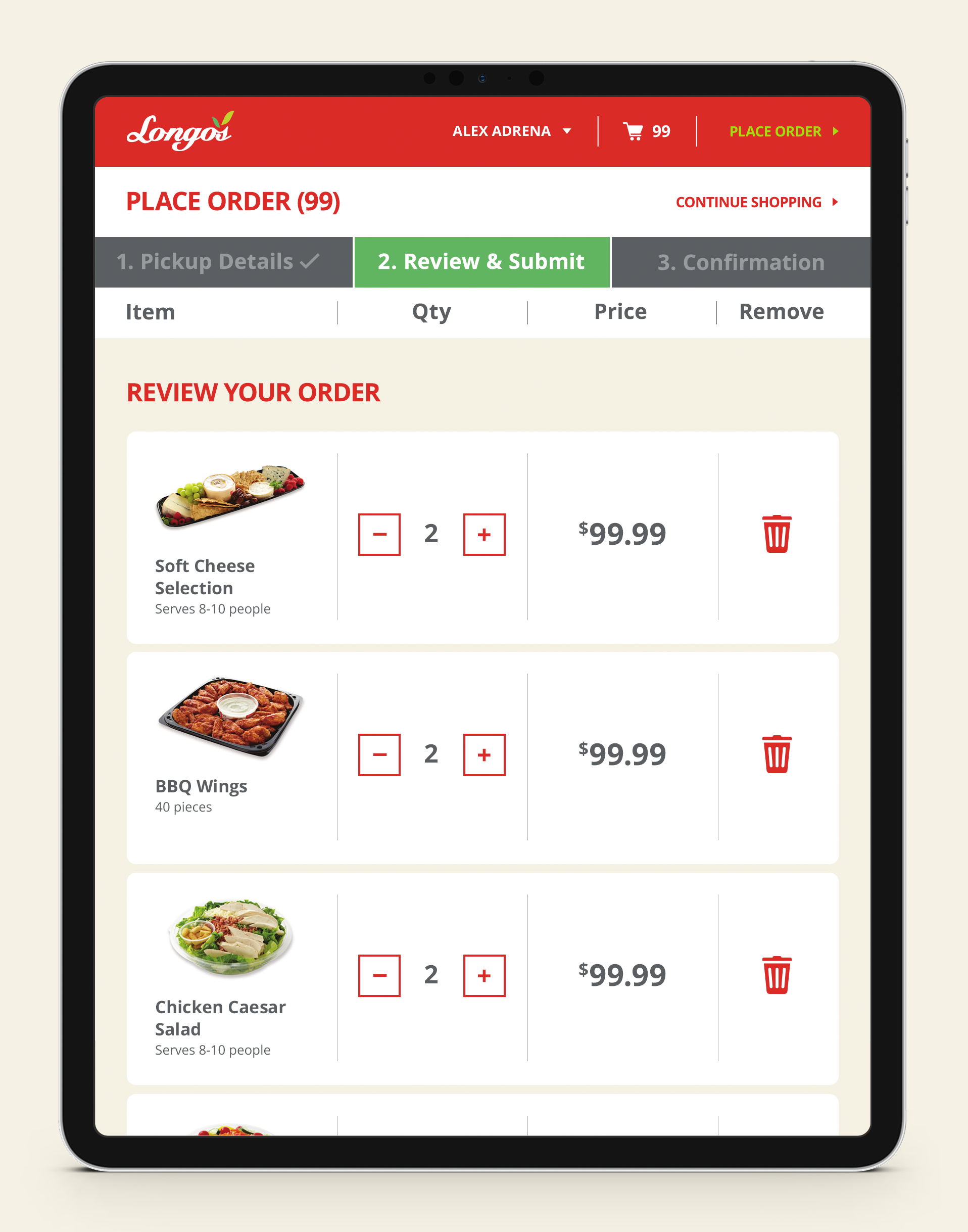
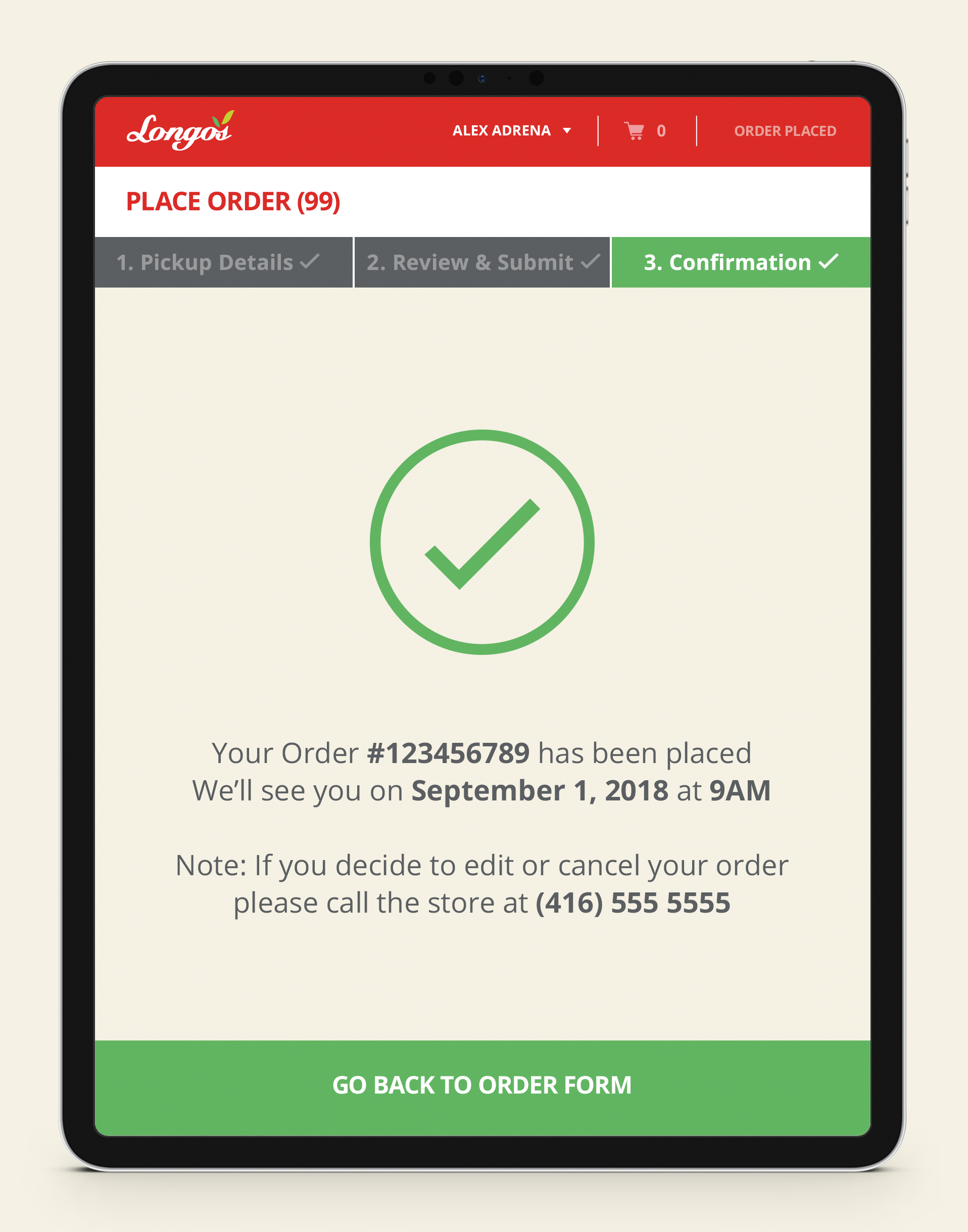
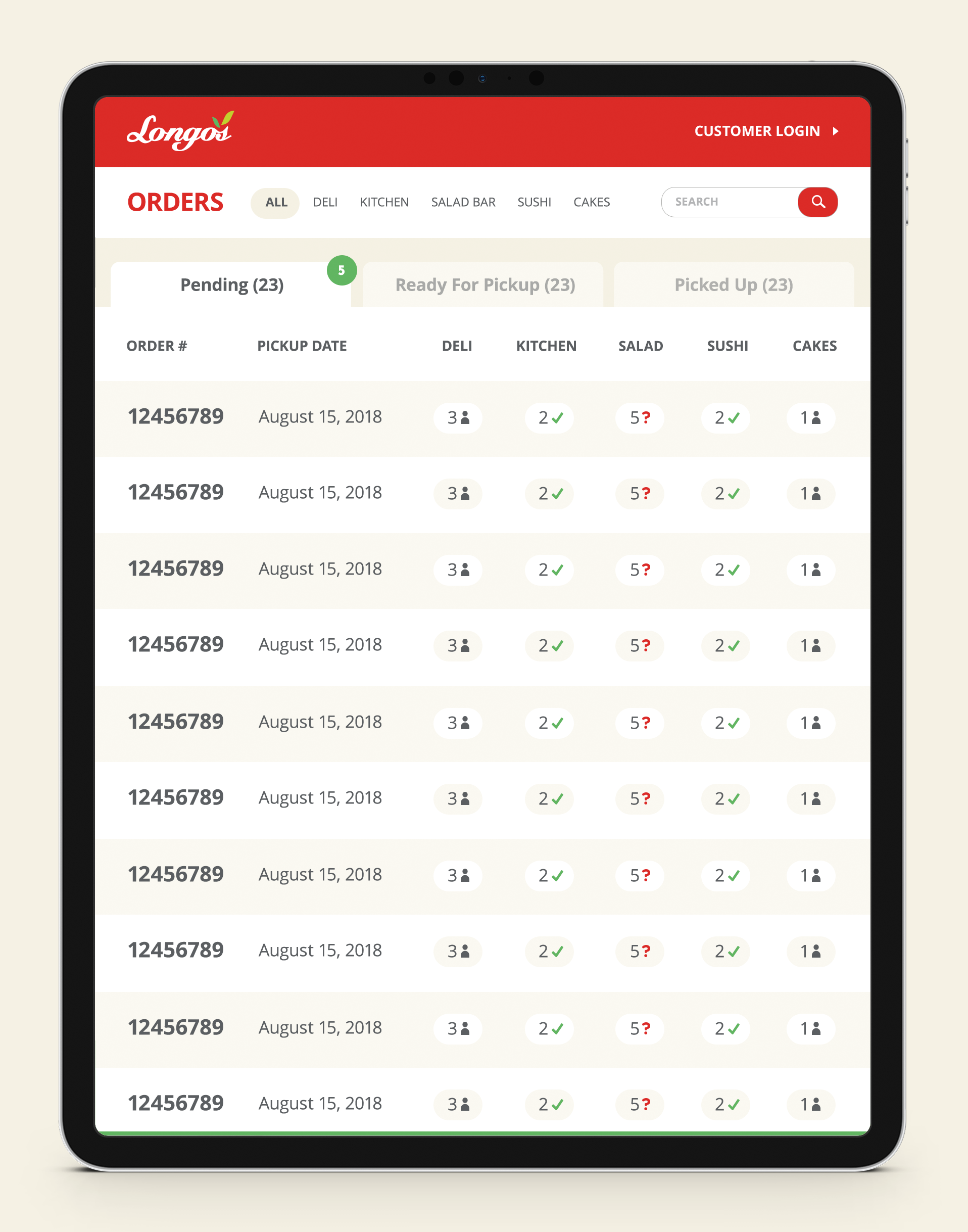
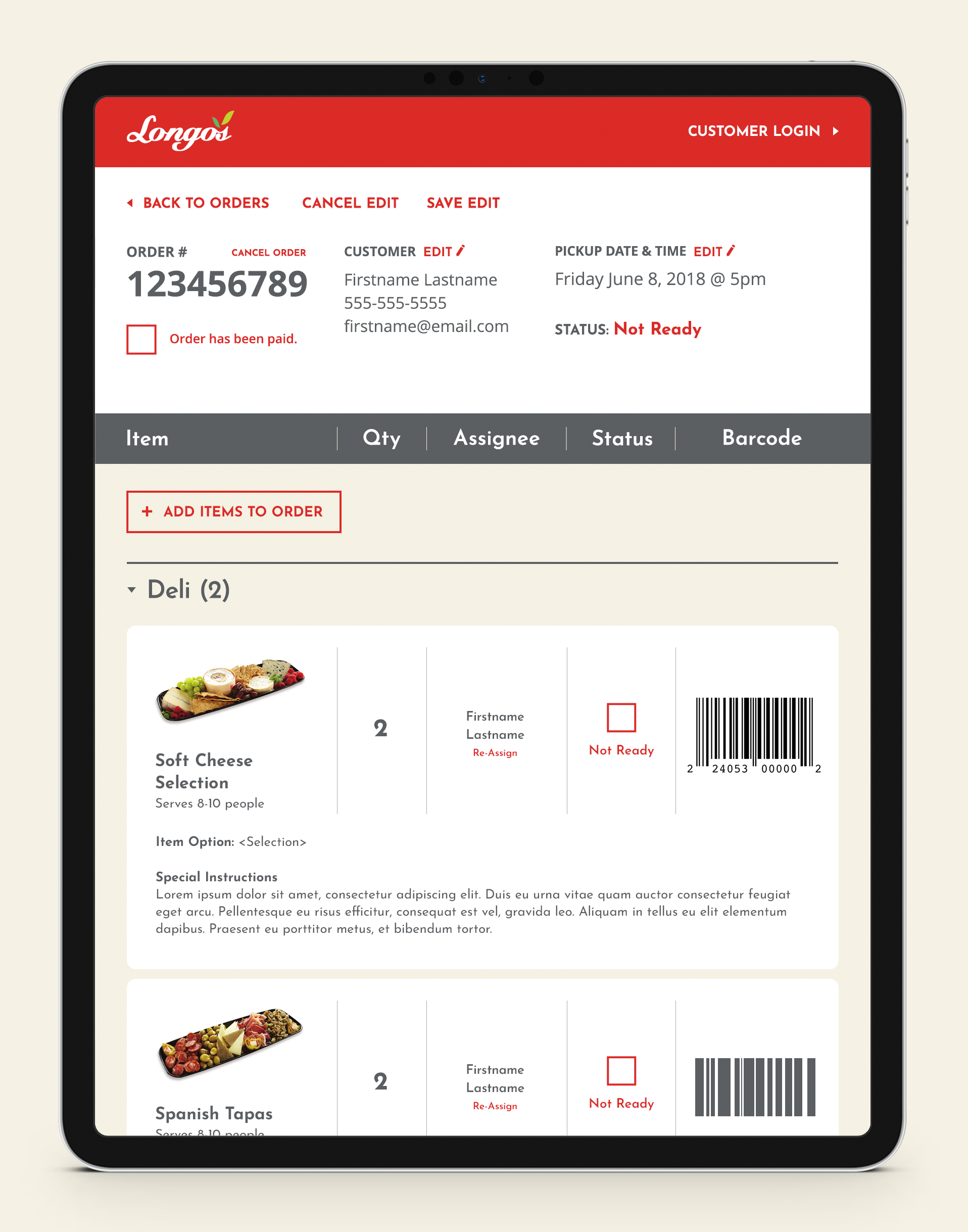
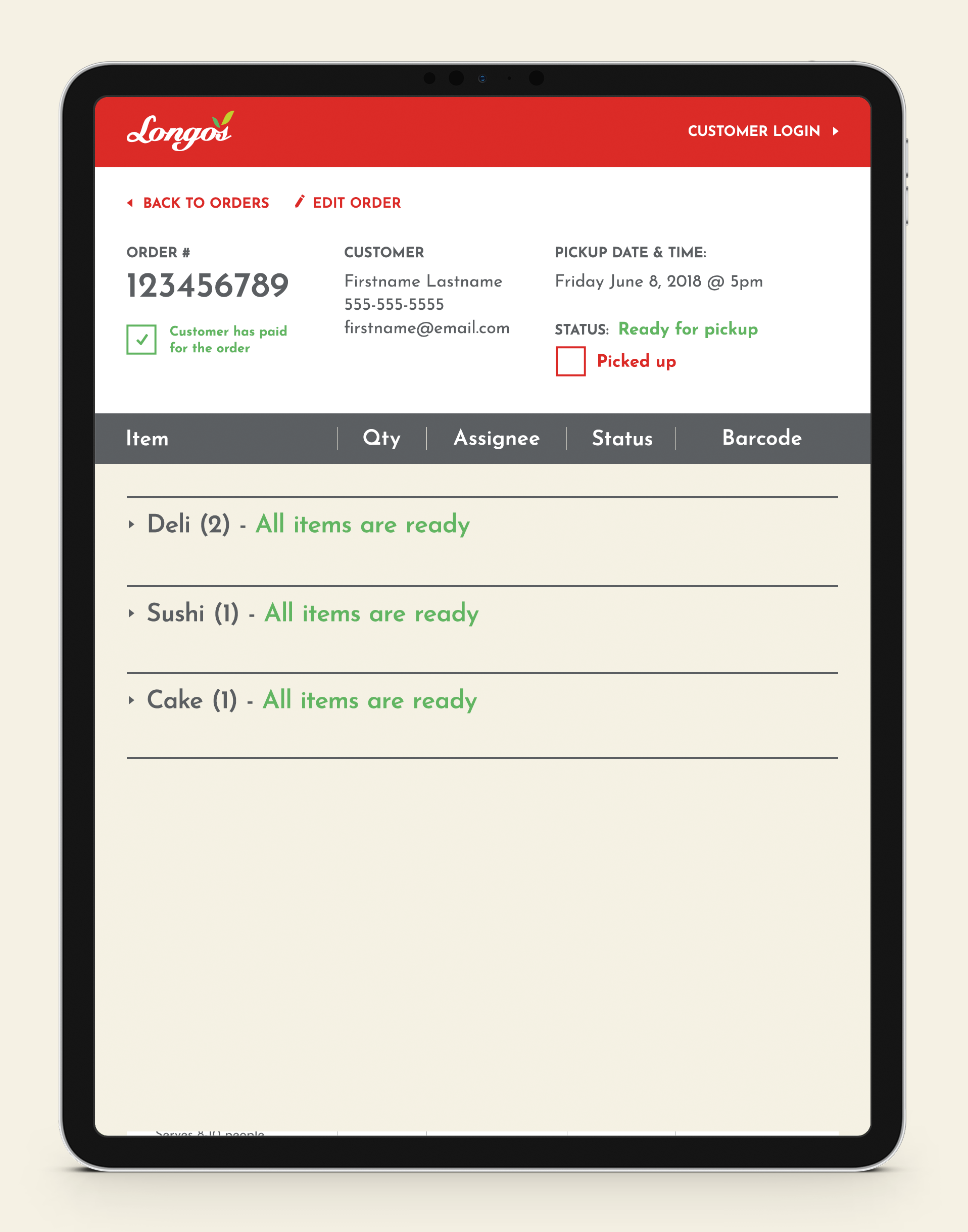
Because the first release of the application focused only on order fulfillment, a future state prototype was developed to provide confidence to stakeholders on the roadmap for the application.
The Outcome
The app was launched at Longo’s Maple Leaf Square location in Toronto, where department leads reported a significant reduction in order errors. Existing customers were thrilled to use a tablet to place orders, replacing the traditional stack of papers and booklets. With ongoing use and testing, the app is set to evolve in line with the initial development plan.